
What a Home Holds
What a Home Holds
"Sometimes the places we are most drawn to have been quietly preparing for us long before we arrive."

When we imagine our future home, we often think about what we will create within it.
The kitchen where birthdays will be celebrated. The garden where children will play. The dining table around which friends will gather. The paint colours, the fabrics, the architecture, the furniture carefully chosen to express something about who we are and how we wish to live.
Rarely do we stop to consider what that home may already be holding.
Recently, I found myself reflecting on a client whose previous journey towards home has been anything but straightforward.
Their original dream was to build a modern home from the ground up—a place designed precisely for the life they imagined, displaying the sophistication they saw within themselves. But instead of becoming this, the project became an ongoing source of anxiety. Structural problems emerged. Essential systems had never been completed. Hidden mistakes surfaced one after another. Functionality at its core seemed to escape the building at every turn. What should have been a joyful beginning became years of stress, uncertainty and exhaustion.
Even deciding to leave brought little relief. Sales collapsed, purchases fell through and every step forward seemed to be met with another unexpected obstacle.
Then something changed.
They found the land for them and found the right property.
On paper, it was simply a beautiful country home. But standing within it, it felt like something altogether different.
Outside, orchards produced fruit each autumn. Vegetable gardens had been lovingly cultivated season after season. Grazing land stretched gently away from the house, alive with the possibility of animals and childhood adventures. The family who had cared for the property had not simply lived there—they had woven themselves into it. They had created a small local business from the apples grown in the orchard. Their children had grown up beneath those trees. The rhythms of everyday life had become part of the landscape itself.
It wasn't perfection that filled the space.
It was care.
And I began wondering whether this is something we recognise far more instinctively than we realise.
The Invisible Architecture of Stewardship
As designers, we often speak about proportion, materials, light and craftsmanship. Increasingly, I find myself thinking about another layer that sits quietly beneath all of these.
Stewardship.
There is something profoundly different about walking into a place that has been consistently cared for.
Not necessarily expensively renovated.
Not immaculately styled.
Simply... loved.
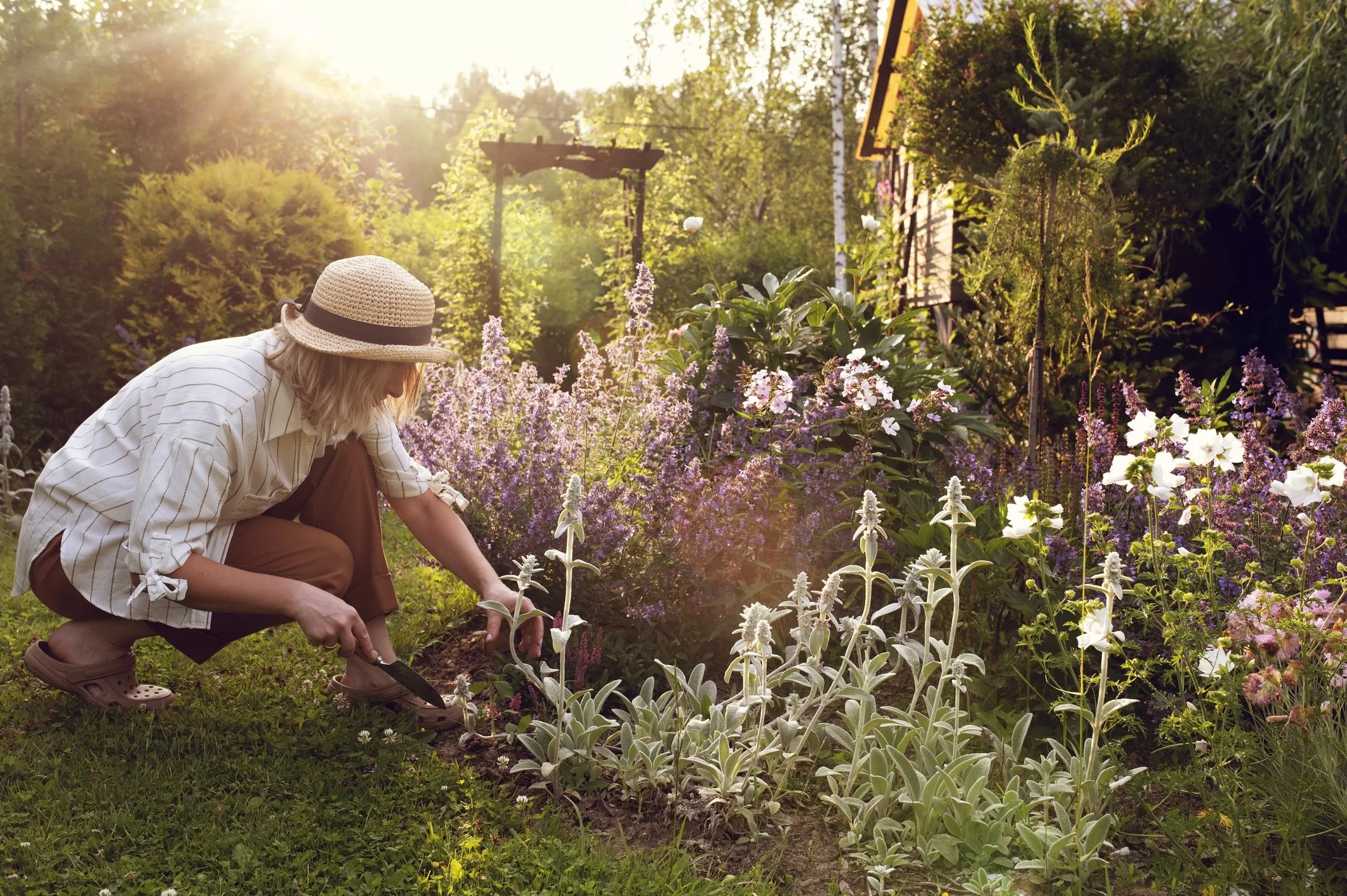
You notice it in the worn stone step that has welcomed thousands of footsteps home. In the espaliered apple tree that has been patiently trained over decades. In herb beds that have been replanted every spring. In repaired gates, polished handrails and gardens that have evolved slowly rather than being installed overnight.
These things are not simply maintenance.
They are the accumulated layers of nurture, intention and quiet stewardship
Perhaps that is what gives certain homes their unmistakable feeling of warmth. Not because every room is perfect, but because someone has quietly invested time, patience and care into them, year after year.
The house becomes a record of those small acts.
Can We Feel a Life Well Lived?
People often ask me about the energy of a home.
Sometimes they expect my answer to involve complicated principles or unseen forces.
Yet I wonder whether some of what we describe as energy is wonderfully tangible.
A home carries stories.
It remembers celebrations and grief, ordinary Tuesdays and Christmas mornings, muddy boots by the back door after long walks, children measuring themselves against a pantry wall, vegetables harvested from the garden, fires lit on cold evenings, neighbours welcomed through an open gate.
None of these things are visible in isolation.
Yet together they create something surprisingly powerful.
You don't see stewardship and intention.
You experience it.

The Dream We Didn't Know We Needed
Perhaps this family's greatest discovery was not simply a new home, but a place that already embodied many of the qualities they were longing for.
Peace after uncertainty.
Space after constraint.
Gentleness after years of conflict.
The orchards, gardens and grazing land were not magical in themselves, nor was the house somehow responsible for changing their lives. Rather, it offered an environment whose history, rhythm and character supported the life they were now ready to begin.
Perhaps this is where our relationship with a home becomes so fascinating.
Every house carries something of its past. The memories of previous families, years of care, moments of celebration, periods of neglect, and the countless everyday rituals that have unfolded within its walls all leave an imprint. Whether we see this as history, atmosphere or energy, many of us instinctively sense that some places simply feel different from others.
Yet we are never merely passive recipients of that story.
One of the central principles that has guided my work is that a home is always capable of renewal. Through our intentions, our daily habits, the objects we choose to keep, the way we care for the land, and the memories we create, we gradually change the environment around us. We soften what no longer serves us and strengthen what helps us flourish.
In that sense, every home is both inherited and continually rewritten.
We become its custodians, but we also become its authors.
Perhaps that is why the most meaningful homes are never defined solely by beautiful architecture or exquisite interiors. They are places where the environment and its inhabitants quietly begin to shape one another for the better.
That, to me, is the true purpose of an aligned home.